
Our Educational Program
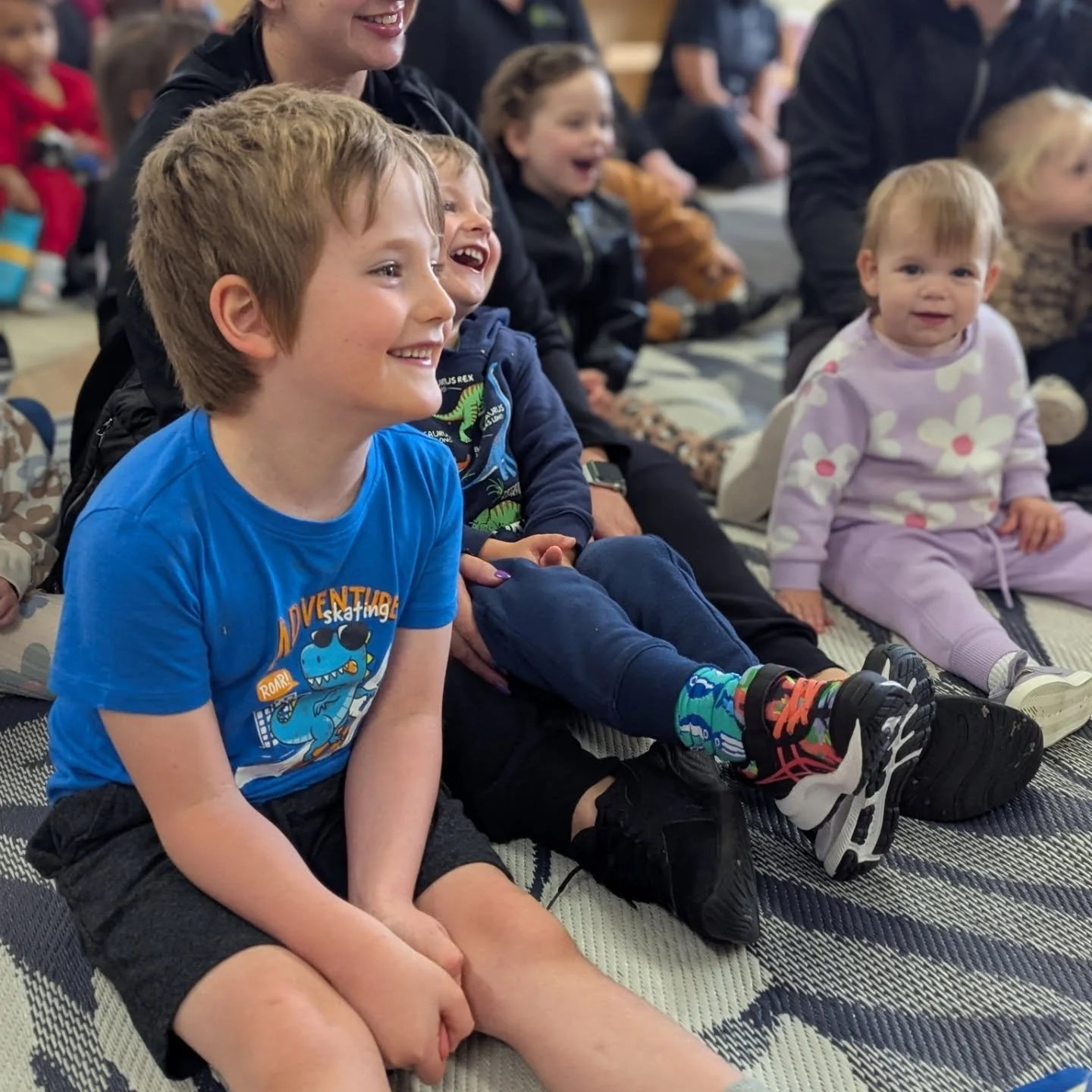
At Seeds Montessori, we deliver an authentic Montessori-based early learning program that respects and nurtures the whole child — supporting their emotional, social, physical, and cognitive development as one connected journey.
We encourage independence, confidence, and curiosity through a carefully prepared learning environment where each child is valued as a unique individual with their own strengths, interests, and pace of learning.
Our program is guided by the Early Years Learning Framework (EYLF) and delivered by qualified, passionate educators committed to providing high-quality education and care.
Each learning space is intentionally designed to support hands-on exploration, independence, and discovery, aligned with the Montessori approach across five key developmental areas.
Practical Life
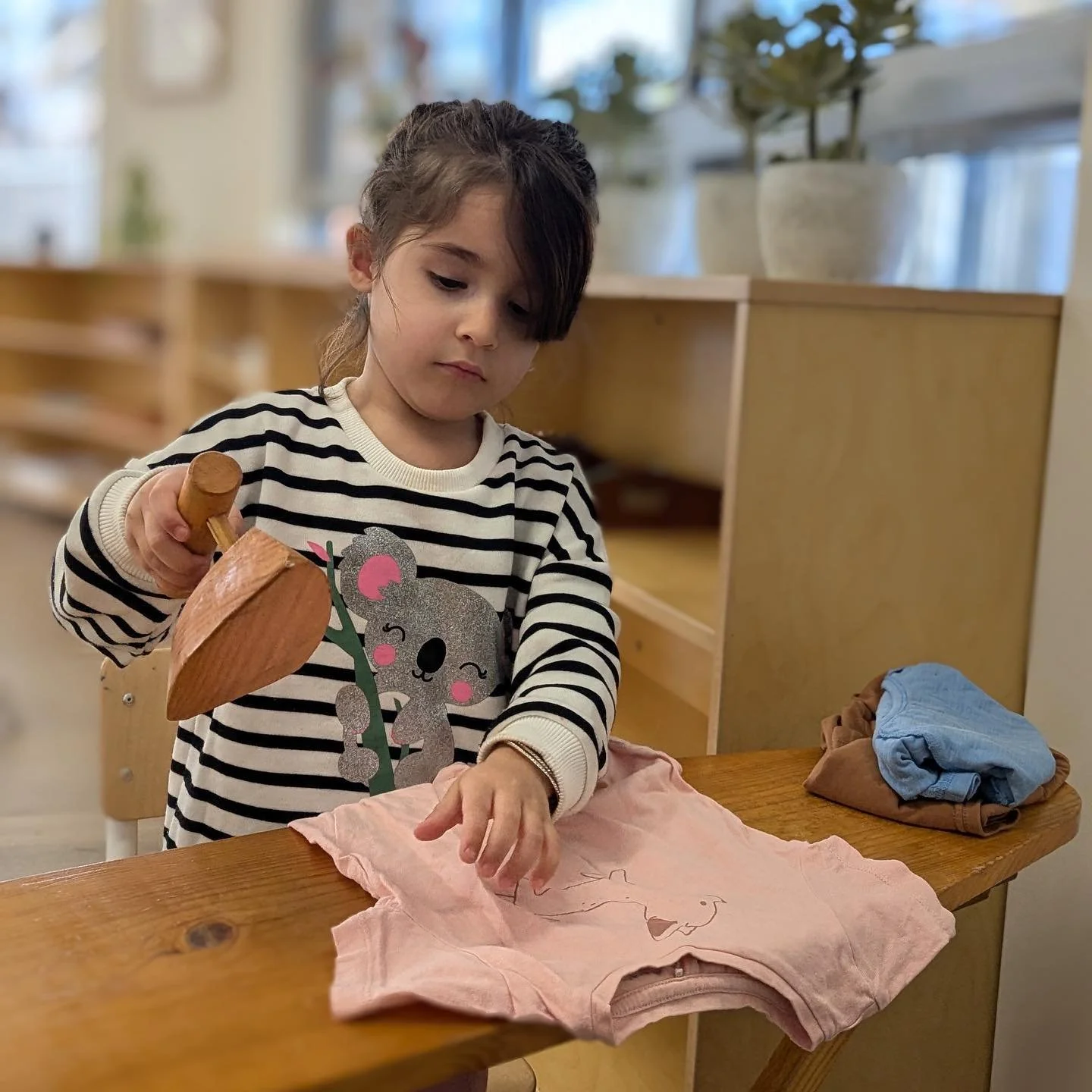
Practical Life activities are carefully designed to reflect each child’s culture, home life, and everyday experiences, helping them feel a strong sense of belonging and connection.
These activities build independence, coordination, confidence, and respect for self and others through four key areas:
Care of self – such as food preparation, washing, dressing, and personal independence skills
Care of the indoor and outdoor environment – including cleaning, gardening, and caring for pets
Grace and courtesy – such as greetings, manners, respectful communication, and social interactions
Applied exercises – activities that refine movement, coordination, balance, and concentration (e.g. walking the line, carrying objects carefully, moving quietly)
Through Practical Life, children develop real-world skills that support independence, confidence, and responsibility in everyday life.
Sensorial
Sensorial materials and activities help children refine and develop their senses through exploration, order, and self-discovery. They encourage concentration, independence, and a sense of calm, while allowing children to notice, compare, and understand the world around them in a meaningful way.
Each activity is designed with precision and self-correction, supporting children to learn through experience and reflection.
Sensorial learning is grouped into seven key areas:
Sight (visual) – recognising size, shape, colour, and dimension
Touch (tactile) – exploring texture, weight, and surface qualities
Smell (olfactory) – identifying and distinguishing scents
Taste (gustatory) – exploring and recognising flavours
Sound (auditory) – developing listening and sound discrimination skills
Stereognostic (kinaesthetic) – identifying objects through touch and movement
Thermic – exploring temperature differences
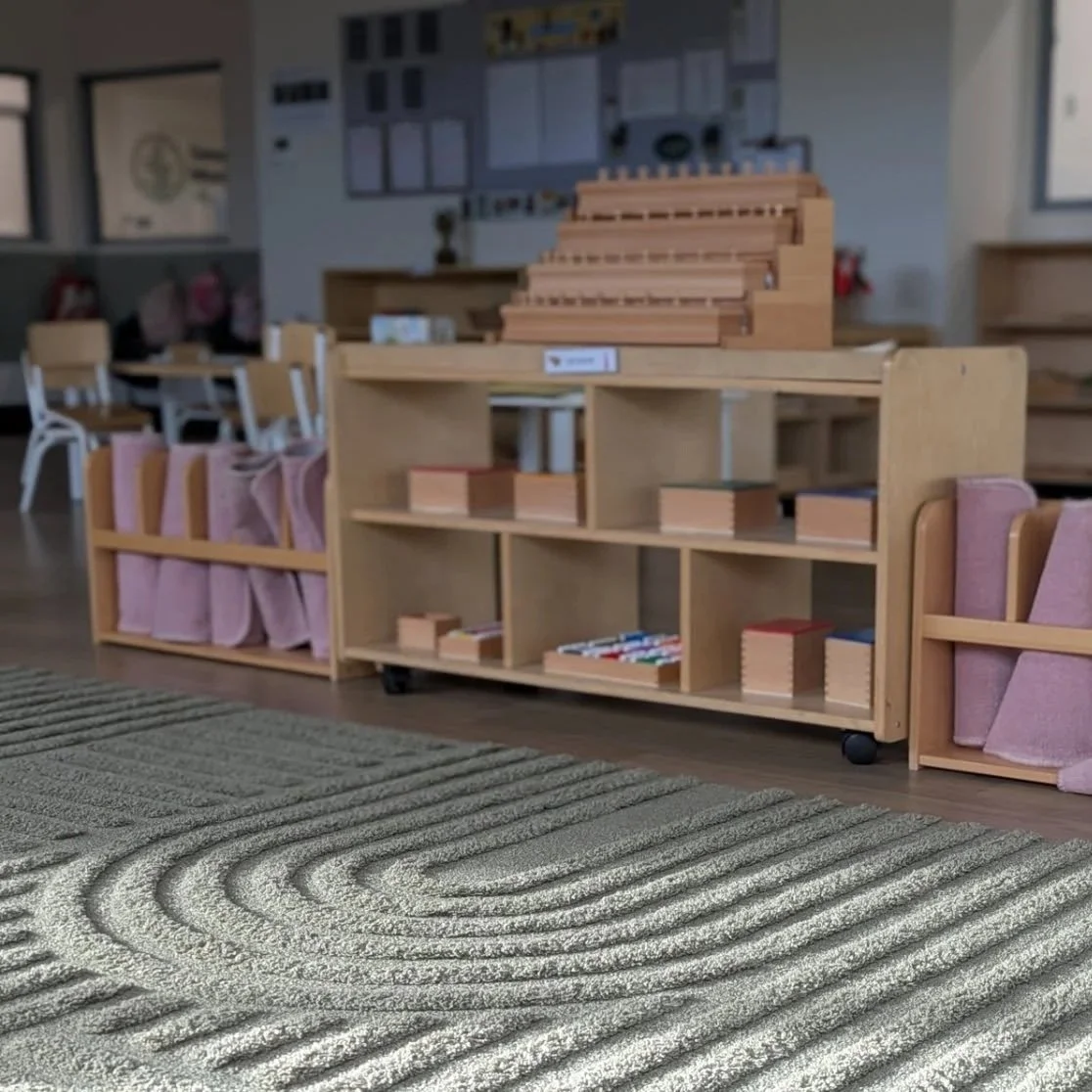
Children work with carefully designed Montessori materials that isolate specific qualities and support deep learning through repetition and focus. These include materials such as the Pink Tower, Brown Stairs, Knobbed Cylinders, and Colour Tablets.
Through these experiences, children strengthen fine motor skills, visual and auditory discrimination, coordination, and the ability to order, classify, and make sense of their environment.
Literacy
At Seeds Montessori, literacy and language development are embedded throughout the learning environment and form an important part of each child’s daily experiences. Our approach is grounded in phonetic awareness, supporting children to build strong foundations for communication, reading, and writing.
We recognise that spoken language is the foundation for literacy development. Children are encouraged to express themselves confidently, engage in meaningful conversations, and develop a love of language through hands-on learning experiences.
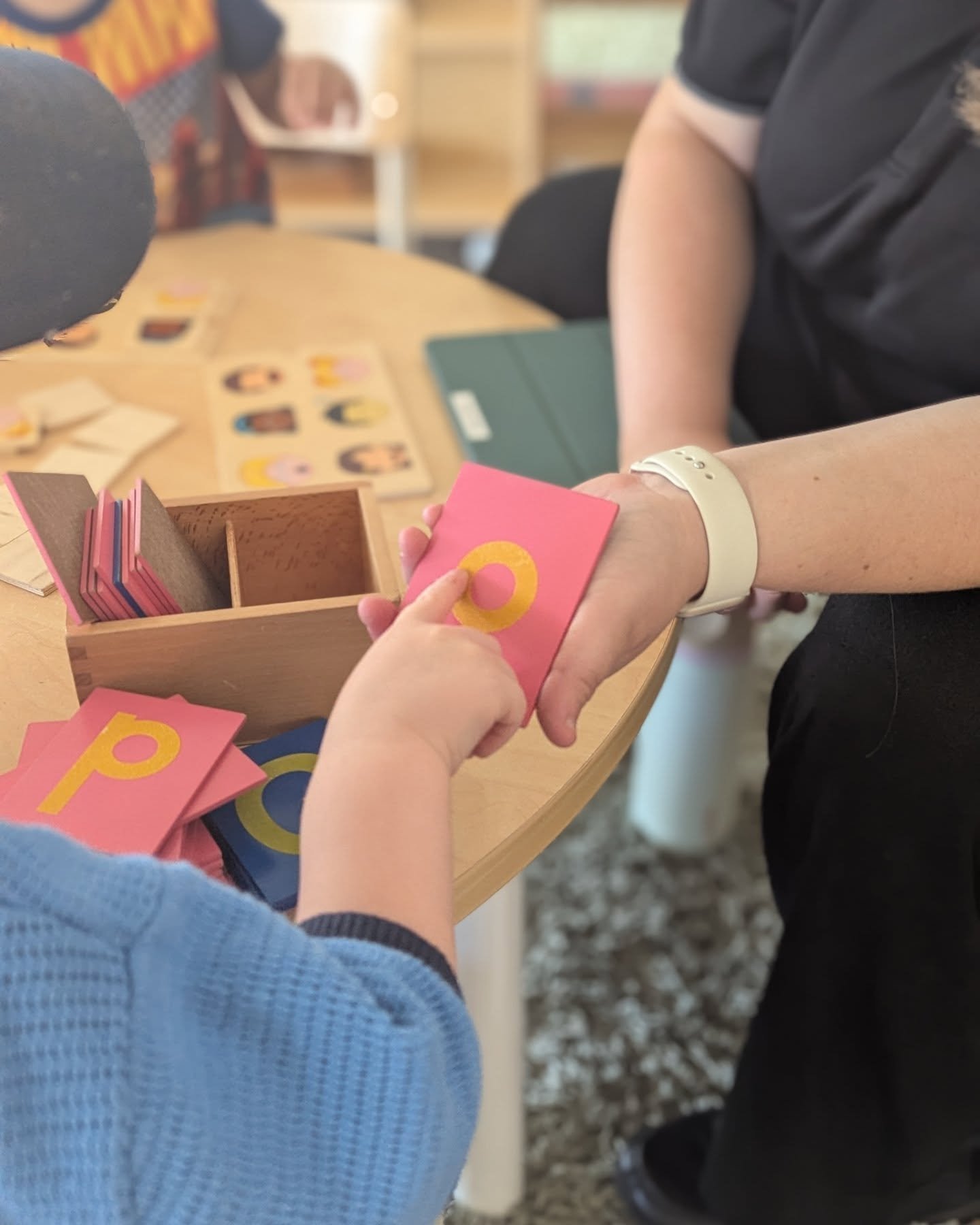
Children work with carefully designed Montessori language materials, progressing from tactile experiences such as the Sandpaper Letters through to reading and word-building activities using the Moveable Alphabet.
Our literacy program focuses on three key areas:
Sensorial – Sandpaper Letters provide a multi-sensory approach to learning sounds and letter formation, helping children build muscular memory through tracing and repetition.
Mechanical – Insets for Design strengthen fine motor control and hand coordination, preparing children for writing.
Intellectual – The Moveable Alphabet supports children to build words phonetically, encouraging early reading, spelling, and sound recognition through hands-on exploration.
Many Montessori activities also prepare children indirectly for writing by strengthening concentration, coordination, and fine motor development.
To further support early literacy, the Jolly Phonics program is incorporated across all classrooms, helping children develop confidence in letter sounds, blending, pronunciation, and early reading skills through engaging and interactive learning experiences.
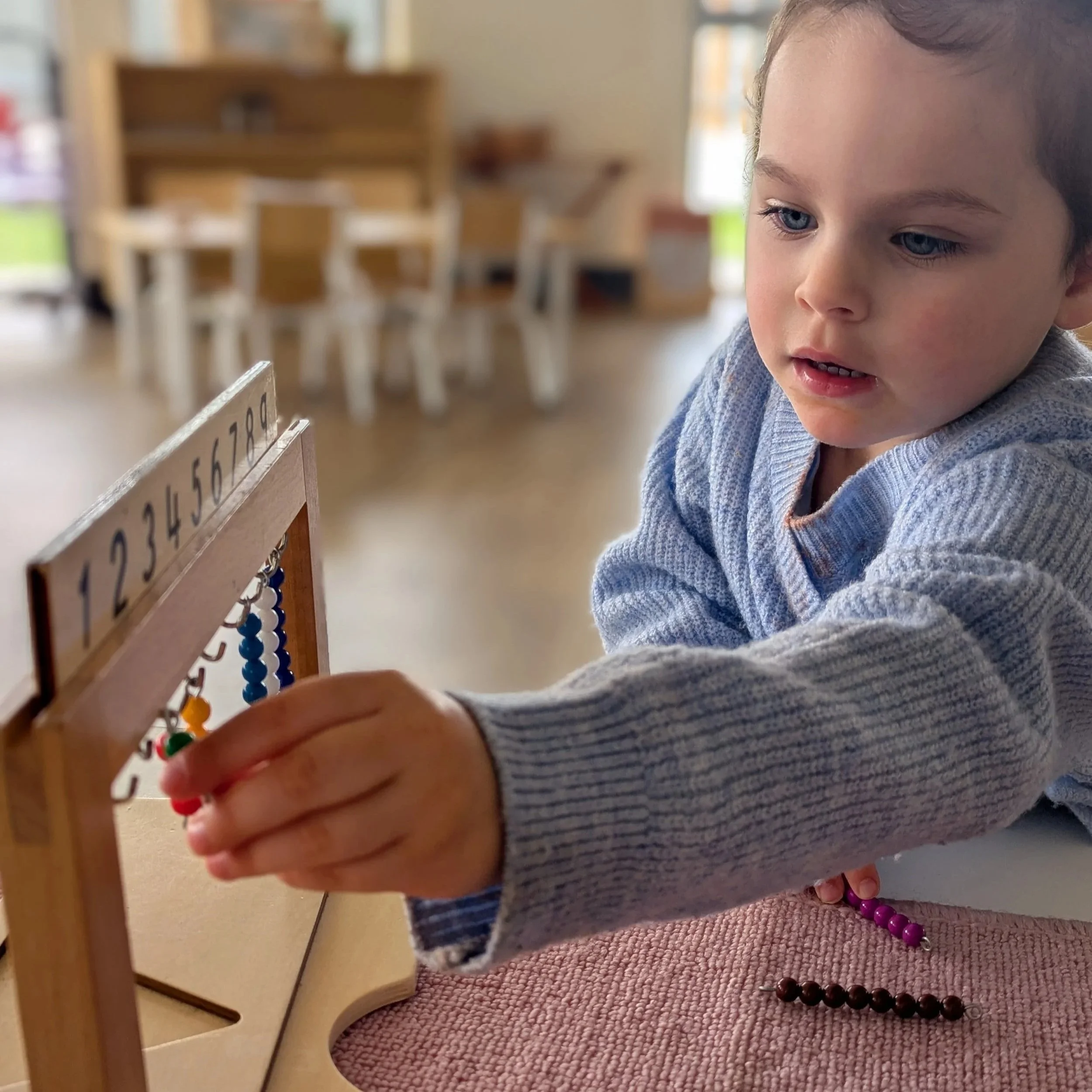
Mathematics.
At Seeds Montessori, children learn mathematics through hands-on experiences that support the progression from concrete learning to abstract thinking.
Using foundational Montessori materials such as the Golden Bead Material, children develop confidence in quantity, symbol recognition, place value, and early problem-solving skills.
Each activity builds upon the next, helping children develop mathematical understanding through meaningful, hands-on learning experiences.
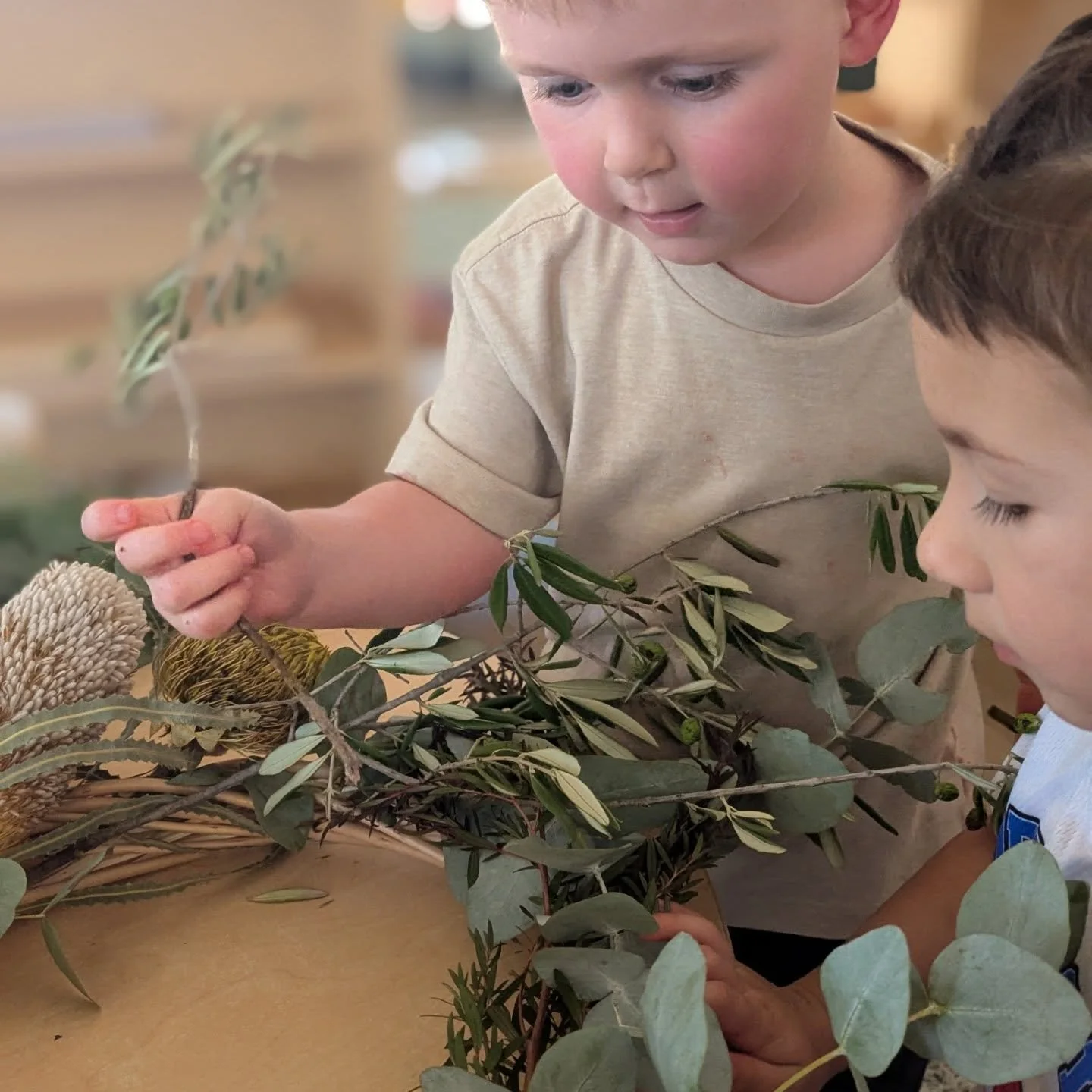
Cultural Studies.
Culture allows the child to explore the natural world around them and includes:
Geography (continents, landforms, earth layers, solar system),
Zoology (classification, physiology of animals),
Botany (ecology, classification, physiology of plants),
History (time lines, using a calendar),
Science.
Art and music could be considered cultural activities, however, creativity is encouraged across all curriculum areas. The cultural area is clearly identifiable by globes, puzzle maps, flags and perhaps images or materials from other cultures, including art, music, history, geography, biology, zoology, physics/science.
The materials in this area have a practical life and/or sensorial aspect and involve manipulation with the hand and mind working together.